
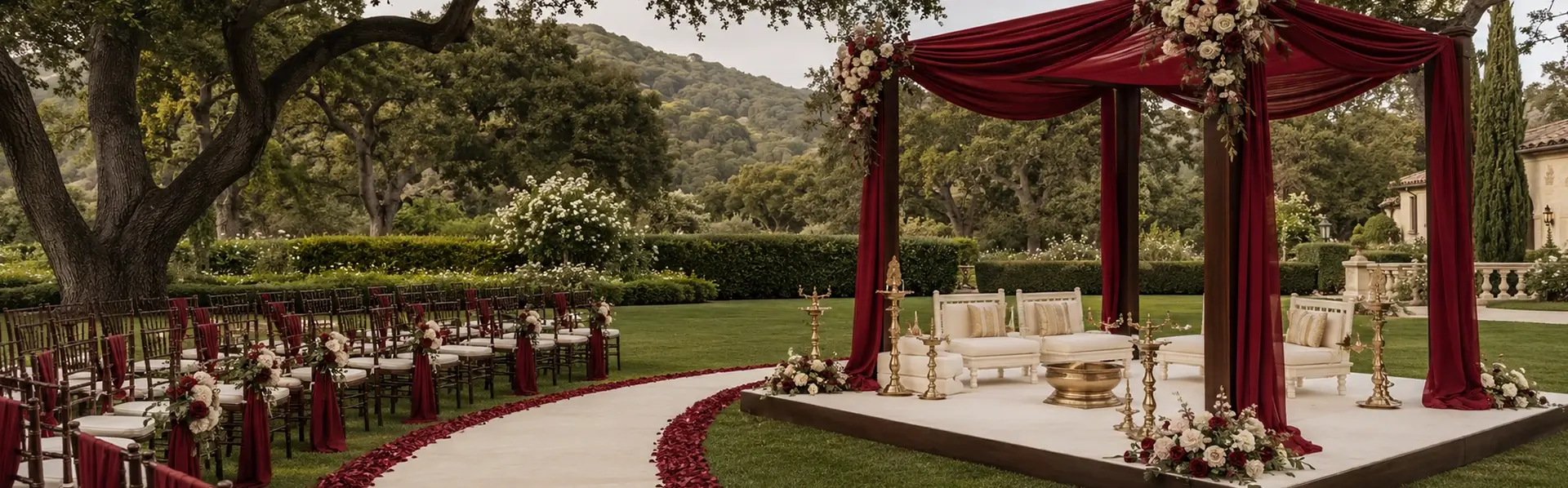
An outdoor mandap can create an extraordinary setting for an Indian wedding ceremony in California. Vineyards, gardens, estates, resorts, coastal properties, and private residences provide beautiful natural surroundings that complement the meaning and visual importance of the ceremony. However, outdoor installations require more planning than simply selecting a mandap design and choosing flowers.
Placement, ground conditions, weather, sun direction, guest comfort, venue access, installation schedules, and sacred-fire requirements can all influence the final design. Early communication among the couple, planner, venue, décor company, florist, officiant, and other vendors helps create a setting that is elegant, culturally respectful, and practical for the location.
Before selecting the visual style of the mandap, confirm what the ceremony itself requires. The number of people who must be seated beneath the structure, the placement of the couple and family members, the officiant’s working space, ceremonial tables, a Havan Kund set, offerings, instruments, and movement during the rituals should all be considered.
A mandap that looks spacious in a photograph may feel crowded once ceremonial furniture, flowers, sacred items, and participants are added. Providing the décor team with ceremony details early allows the structure, platform, and furniture arrangement to support the rituals rather than interfere with them.
The best view is not always the best installation location. A scenic area may have sloping ground, soft soil, irrigation lines, limited access, strong afternoon wind, direct sun, or insufficient space for guest seating. The selected location should provide a stable setting for the structure while allowing comfortable circulation for the wedding party, officiant, photographers, musicians, and guests.
Couples and planners should walk the site with the venue and décor team whenever possible. Discuss the exact footprint of the mandap, aisle alignment, guest sightlines, nearby trees, overhead restrictions, landscape protection, emergency access, and the route used to transport rental pieces from the delivery vehicle to the ceremony area.
Outdoor ceremony sites can include lawns, gravel, stone terraces, decks, courtyards, sand, or uneven vineyard terrain. Ground conditions influence how a mandap can be positioned and whether a platform is advisable. A properly planned platform can establish a defined ceremonial space, improve visibility, create a level surface, and protect textiles and furniture from direct contact with the ground.
The platform must be appropriate for the mandap footprint, ceremony layout, access needs, and venue rules. Steps, edges, surface coverings, and any accessibility considerations should be discussed in advance. Structural, anchoring, and safety requirements should always be confirmed with the venue and qualified installation professionals rather than assumed from photographs of another event.
Wind is one of the most important considerations for an outdoor mandap. Flowing drapes and suspended floral details can look graceful in calm weather but behave very differently when exposed to gusts. Wind can affect fabrics, arrangements, signage, aisle markers, umbrellas, lanterns, and other lightweight elements.
The design should reflect the exposure of the site and the season. Fabric quantities, attachment methods, floral placement, freestanding accessories, and any anchoring requirements may need to be adjusted. A professional team may recommend a more restrained treatment when conditions make elaborate suspended or loose elements impractical.
California sunshine is beautiful, but direct exposure can affect the couple, family members, officiant, guests, flowers, and photography. Visit the ceremony area at approximately the same time of day as the planned wedding whenever possible. This helps determine whether the mandap will face harsh light, whether guests will be looking directly into the sun, and how shadows will move across the ceremony space.
The orientation of the mandap may be influenced by religious tradition, venue layout, views, and natural light. These considerations should be discussed together rather than addressed separately. Shade structures, umbrellas, water stations, fans, heaters, or adjusted ceremony timing may be appropriate depending on the season and location.
Outdoor conditions affect décor materials in different ways. Delicate flowers may wilt in heat, fabrics can collect dust or moisture, polished metal pieces may become hot in direct sunlight, and paper details can react to wind or humidity. The florist and décor company should know how long the installation will be exposed before the ceremony begins.
Selecting durable flowers, installing sensitive elements closer to the ceremony time, placing sacred or delicate pieces after the principal structure is complete, and keeping protective coverings available can help preserve the presentation. If décor will remain outdoors overnight, additional security and weather precautions may be necessary.
Many Hindu wedding ceremonies include a sacred fire, but California venues may have specific rules concerning open flame, fire alarms, smoke, fuel, extinguishers, permits, supervision, and the location of a Havan Kund. Outdoor placement does not automatically mean that an open flame is permitted.
Couples should ask the venue for its written flame policy before finalizing the mandap location or ceremony plan. The officiant, planner, and décor company should understand any limitations. Depending on the property and current requirements, approval may also involve venue management, fire-safety personnel, or local authorities. Cultural significance should be explained clearly and respectfully while all applicable safety rules are followed.
Even a daytime outdoor ceremony may require electrical access for microphones, musicians, fans, lighting, or vendor equipment. Evening ceremonies and receptions may need pathway lighting, uplighting, lanterns, or illumination around steps and platforms. Extension cords and equipment should be planned so they do not create visible clutter or interfere with guest movement.
Confirm where power is available, what the venue permits, whether generators are needed, and who is responsible for electrical distribution. Lighting should enhance the mandap and support photography while maintaining a peaceful ceremonial atmosphere.
Mandaps, platforms, carved furniture, ceremony chairs, brass pieces, and floral structures can require substantial transportation and installation labor. Ask the venue about loading areas, vehicle restrictions, parking, elevators, stairs, narrow paths, lawn protection, delivery hours, and the distance between the loading point and ceremony site.
A long carry across a vineyard or garden requires more time and staffing than direct access to a ballroom. Accurate access information helps the rental company prepare the appropriate team, equipment, and schedule and contributes to a more dependable proposal. Our article explaining what affects Indian wedding décor rental costs in California provides additional information about delivery and labor considerations.
Outdoor installations should not be rushed into an unrealistically short setup window. The team may need to unload inventory, position a platform, assemble the mandap, install fabrics and florals, arrange ceremonial furniture, add accessories, complete styling, and make adjustments after the florist or other vendors arrive.
Confirm when the venue becomes available, whether another event is scheduled beforehand, when landscaping or cleaning will be completed, and when guests will enter the area. If early installation or overnight setup is proposed, ask about security, irrigation, weather exposure, and venue supervision.
Every outdoor Indian wedding should have a backup plan, even during a season generally associated with dependable weather. Rain, excessive heat, smoke, poor air quality, high wind, or unexpected cold can affect the ceremony and the safety of an installation. A backup plan should identify an alternate covered or indoor location and explain how the mandap, platform, sacred fire, guest seating, and décor will be adapted.
The decision deadline is equally important. Couples should know who will monitor conditions, who has authority to activate the alternate plan, and how much time vendors need to change locations. A clear plan protects the ceremony from last-minute confusion and allows the design team to prepare suitable alternatives.
The mandap is the visual and spiritual center of the ceremony, but the entire guest experience deserves attention. Consider shade, temperature, hydration, restrooms, walking surfaces, elderly relatives, mobility needs, and the distance between parking and seating. A beautiful outdoor location should remain welcoming and manageable for everyone attending.
Guest chairs should be positioned on an appropriate surface with clear aisles and unobstructed views. Rugs, runners, steps, decorative objects, and electrical equipment should be arranged carefully so that ceremonial beauty does not compromise comfortable movement.
Before signing a rental agreement, confirm the mandap dimensions, included furnishings, platform requirements, installation and breakdown times, weather limitations, substitution policies, delivery access, labor, venue coordination, and backup-location options. Ask what information the rental company needs from the venue and when final selections must be approved.
Couples can also review our California Indian wedding checklist and the most important questions to ask before hiring an Indian wedding décor company. Together, these resources can help families prepare for a thoughtful and well-coordinated celebration.
The most memorable outdoor mandaps complement their surroundings without losing their cultural meaning. A vineyard may call for refined textiles and warm natural tones, while a garden can support floral-forward styling and a coastal property may benefit from a cleaner design suited to wind and open views. The goal is not simply to place an indoor structure outside but to design a sacred setting that belongs at the venue.
With careful planning, professional installation, and respect for ceremony requirements, an outdoor mandap can become a beautiful expression of tradition, family, and place.