
One of the first questions couples ask when planning an Indian wedding is how much the décor rentals will cost. The most accurate answer depends on the celebration itself. A single ceremony with a simple mandap requires a different combination of inventory, design, transportation, and labor than a multi-day wedding featuring a mehndi, sangeet, baraat, Hindu ceremony, cocktail hour, and formal reception.
Rather than relying on a general package price that may not reflect the event, couples should understand the principal elements that shape a professional proposal. This makes it easier to compare services, establish priorities, and request an accurate quote for an Indian wedding in California.
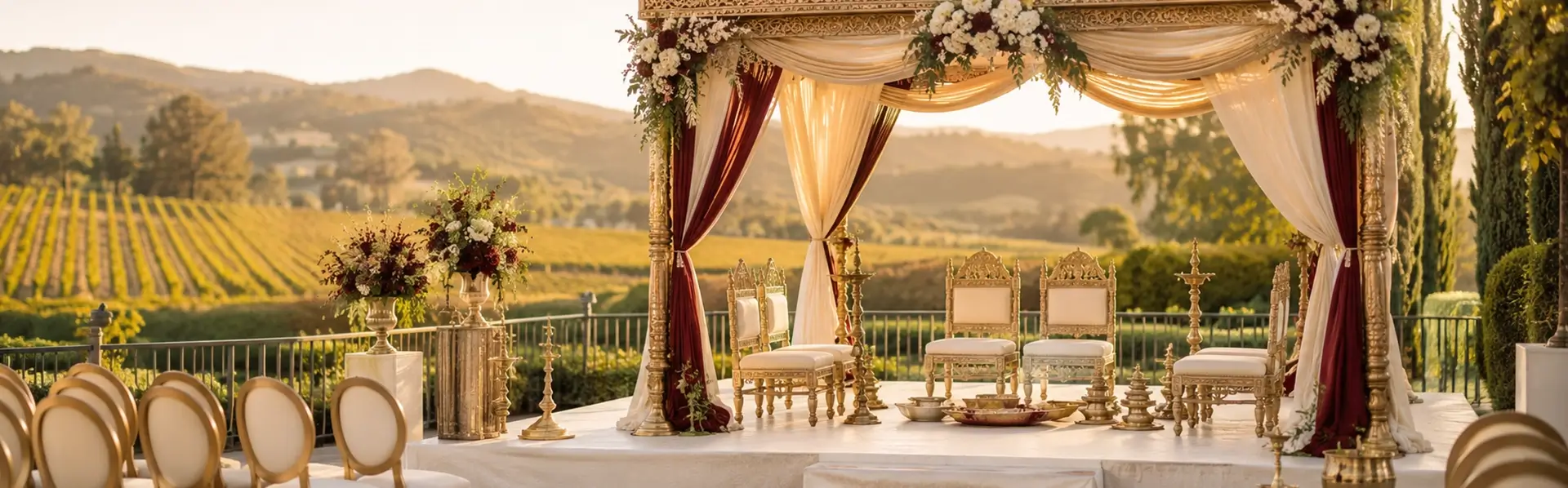
The mandap is often the principal focal point of a Hindu wedding ceremony and one of the most influential elements in the décor budget. Cost considerations may include the mandap structure, columns, canopy, fabrics, floral treatments, aisle décor, ceremony seating, a stage or platform, and culturally significant pieces such as a Havan Kund set.
A lightly dressed mandap using existing rental inventory will generally require less design and installation time than a highly customized structure with substantial floral work, specialty textiles, suspended details, or a raised platform. Venue requirements, ceiling height, ground conditions, and sacred-fire regulations may also affect the final plan.
Indian weddings frequently include several celebrations across multiple days. A mehndi, haldi, sangeet, wedding ceremony, and reception may each require a distinct setting, color palette, furniture arrangement, backdrop, and collection of cultural accessories. The total cost depends not only on how many events are planned but also on whether décor can be thoughtfully reused or transformed between them.
Moving inventory from one venue or room to another, changing a ceremony space into a reception, or completing an overnight reset requires careful scheduling and additional labor. Couples planning several celebrations should provide the complete event schedule when requesting a quote so that delivery, transitions, and breakdown can be calculated properly.
The number and type of rentals selected will naturally influence the proposal. In addition to a mandap or stage, a couple may need Indian furniture, diwans, ornate chairs, jhulas, low seating, lounge furniture, rugs, pillows, coffee tables, backdrops, arches, gateways, umbrellas, lanterns, statues, brass décor, diyas, kalash, torans, signage, or ceremonial accessories.
Authentic, carved, vintage, or specialty pieces may be more limited than standard event furniture and should be reserved early. Choosing coordinated rentals from one established collection can also produce a more cohesive result than sourcing unrelated items from several companies.
Décor costs increase as the level of customization grows. Custom backdrops, specialty fabric treatments, large floral installations, ceiling draping, stage facades, personalized signage, and layered lighting require design time, materials, and skilled installation. Fresh flowers are especially sensitive to season, variety, quantity, and installation complexity.
Couples can manage their priorities by deciding where décor will have the greatest visual and emotional impact. A statement mandap, meaningful entrance, or beautifully composed reception stage may be more valuable than spreading the budget thinly across every corner of the venue.
A professional rental quote often includes considerably more than the visible décor. Inventory must be selected, inspected, packed, transported, unloaded, assembled, styled, dismantled, repacked, and returned. Large mandaps, stages, lounges, and cultural furniture may require several trained team members and dedicated vehicles.
Labor requirements depend on the size of the installation, setup window, venue rules, travel distance, stairs, elevators, loading access, parking, and the time permitted for breakdown. Late-night removal, short installation windows, and long carries from the loading area can require additional staffing.
California offers beautiful settings for Indian weddings, including vineyards, estates, resorts, hotels, ballrooms, coastal properties, and private residences. Each type of venue presents different logistical considerations. A ballroom with a nearby loading dock may be relatively straightforward, while an outdoor vineyard ceremony can involve uneven terrain, limited vehicle access, wind exposure, sun protection, and longer transportation distances.
Before requesting a final proposal, confirm the venue address, setup and breakdown times, loading instructions, insurance requirements, flame policies, platform restrictions, and whether the venue requires union or in-house labor. Clear information prevents unexpected changes later.
Guest count affects more than tables and chairs. A larger celebration may require a wider stage, additional lounge groupings, more aisle décor, expanded entry treatments, larger signage, and décor that is properly scaled for the room. What feels substantial at an intimate gathering may disappear visually in a ballroom designed for several hundred guests.
Sharing an estimated guest count and floor plan helps the décor team recommend appropriately sized pieces without overfilling the venue or leaving important areas visually unfinished.
The lowest number does not always represent the same service. Couples should compare exactly what each proposal includes: rental inventory, customization, design meetings, delivery, setup, styling, room transitions, breakdown, travel, floral work, taxes, and any venue-related charges. It is also important to confirm who is responsible for coordination and whether substitutions may be made.
Ask for an itemized or clearly explained proposal and review it alongside the company’s experience, inventory quality, cultural knowledge, communication, and installation capabilities. Our guide to questions to ask before hiring an Indian wedding décor company can help couples evaluate these details before booking.
A beautiful cultural wedding does not require decorating every available surface. Begin with ceremony necessities and the areas guests will experience most: the entrance, mandap, couple’s seating, stage, and principal gathering spaces. Select a consistent palette, combine statement pieces with restrained supporting details, and ask whether certain furniture or accessories can transition from one event to another.
Early planning also provides access to a wider selection of inventory and gives the design team more time to create an efficient installation plan. The California Indian wedding checklist offers a useful starting point for identifying the rentals each celebration may require.
When contacting a rental company, provide the wedding date, venue, guest count, list of events, ceremony traditions, desired rentals, preferred colors or design direction, setup schedule, and approximate priorities. Inspiration photographs are helpful when used to communicate atmosphere and style, although the final design should be adapted to the venue, available inventory, and the couple’s traditions.
An experienced cultural décor specialist can then recommend suitable options and prepare a proposal based on the actual needs of the wedding. This approach is more dependable than relying on a standard figure that does not account for location, labor, scale, or ceremonial requirements.